
Not Every Audience Needs the Same Story

If your nonprofit isn't raising the money it needs, the problem may not be your fundraising program. It may be your donor communications strategy. Here's how creating the right messages for the right audiences can strengthen donor relationships, improve stewardship, and increase long-term fundraising success.
Why Many Nonprofits Struggle with Donor Communications
We've encountered the same scenario time and again. A nonprofit isn't raising the money it needs, so it invites us in to strengthen its fundraising program. As we dig into the organization's development efforts, we often discover that its fundraising systems are fundamentally sound. Gift processing works. Donor records are organized. Appeals are being sent.
What's missing is a donor communications strategy that intentionally engages supporters, demonstrates the impact of their generosity, and helps them understand the important role they play in advancing the mission.
Every nonprofit has a story to tell, but you have to know who you’re talking to for maximum impact.
Donors and Clients Need Different Messages
Your clients, volunteers, community partners, board members, and donors all care about your mission, but they each have a different relationship with your organization. As a result, they need different kinds of information from you. When nonprofits recognize those differences, their communications become more meaningful and more effective.
Think about the people you serve. They want to know what services are available, whether they're eligible, how to participate, and what to expect. They're asking, Can you help me?
Donors are asking something different: Can I make a difference?
Volunteers want to understand: How can I use my time to help?
Imagine your organization is opening a new food pantry.
A client announcement should explain where it's located, when it's open, and how families can access services. That's exactly the information they need.
A donor message tells a different story. Rather than focusing on logistics, it highlights what the pantry makes possible. Hundreds more families will have reliable access to healthy food. Children won't have to wonder where their next meal is coming from. Neighbors will be treated with dignity during difficult times. Most importantly, it connects those outcomes to the generosity of the people who made them possible.
It's the same story, viewed through a different lens.
Why a Donor Communications Strategy Matters
Research consistently shows that donors are more engaged when they understand the impact of their giving and can see themselves as partners in creating change. Stories create an emotional connection, while measurable outcomes reinforce confidence that their investment is making a real difference. Together, they create compelling donor communications.
Perhaps the biggest mistake nonprofits make is limiting donor communications to fundraising appeals.
Every newsletter, social media post, annual report, event, website update, and email offers an opportunity to strengthen relationships with donors. The goal isn't to ask for money every time. It's to remind supporters that their generosity is making a difference. Research by fundraising scholar Adrian Sargeant has consistently found that meaningful communication, stewardship, and donor satisfaction are among the strongest predictors of donor retention.
How to Build a Stronger Donor Communications Strategy
A simple framework can help.
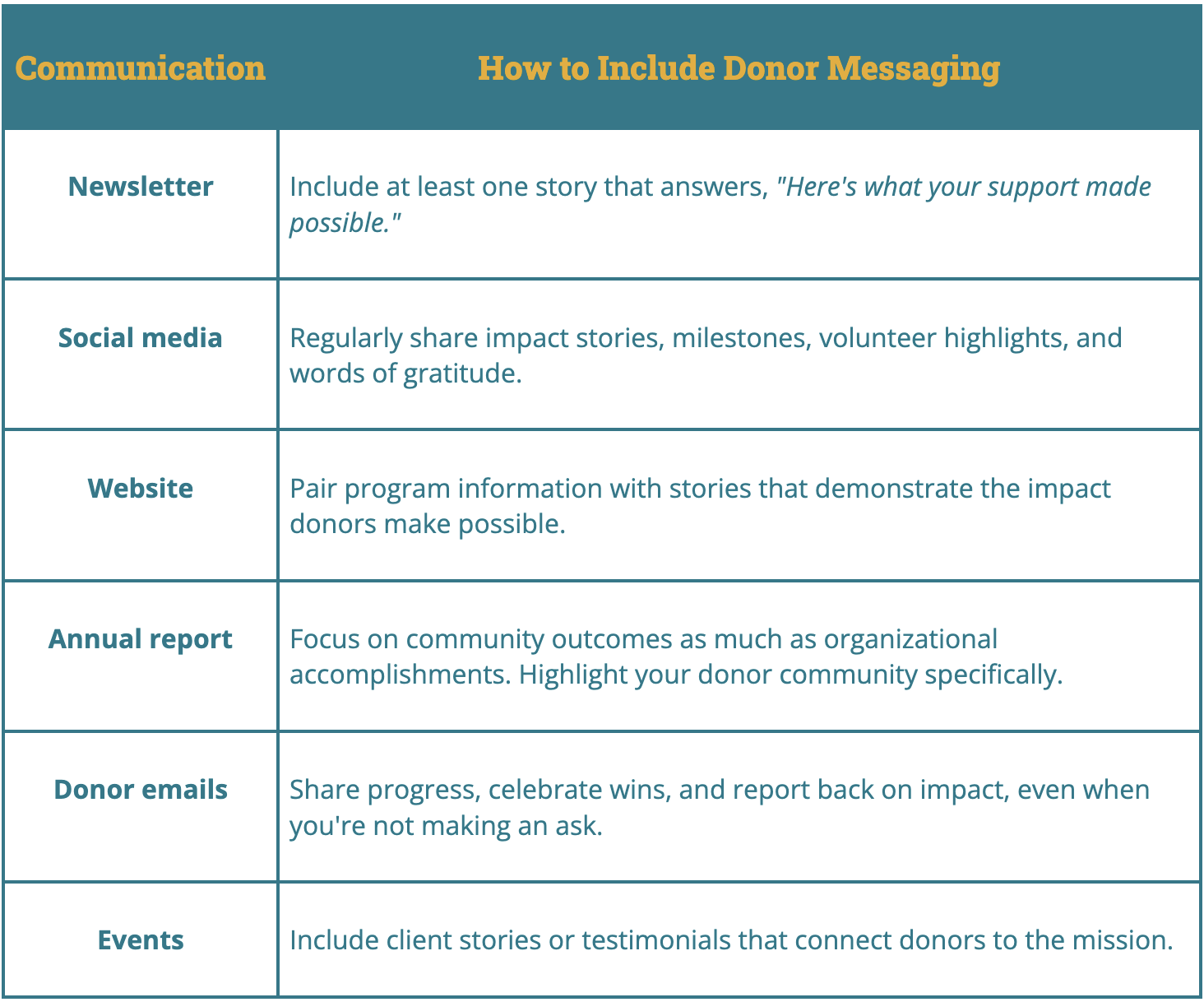
Cultivating Better Donor Stewardship
A helpful rule of thumb is to provide three to five meaningful stewardship communications for every fundraising solicitation. Those touchpoints might include an impact story, a volunteer spotlight, a behind-the-scenes update, a thank-you message, or a progress report. Every communication should leave donors thinking, "I'm glad I support this organization."
Before drafting your next communication, ask one simple question: Who is this for? The answer should shape not only what you say, but how you say it.
When nonprofits tailor their communications to meet the needs of each audience, they build stronger relationships, deepen trust, and create more opportunities for lasting impact.
Take the Next Step
The most effective donor communications are the result of an intentional strategy that aligns fundraising, marketing, and communications around a shared goal: building stronger relationships with the people who make your mission possible.
If your donor communications strategy could use more focus, The Guide to Getting Started can help. It includes practical tools, exercises, and templates to help nonprofit leaders create more meaningful donor communications and greater alignment across fundraising, marketing, and communications. Or, if you need more in-depth support, give us a call. We’re always here to help.

About The Author
For the past 25 years, Dani has helped nonprofits at local, regional, and global levels find sustainable solutions to tricky growth and funding issues. She works with leaders and teams to optimize their approach to fundraising, strategic planning, marketing, and more! Dani is passionate about helping motivated people build vibrant and effective nonprofit organizations—so they can make a meaningful impact in the world!